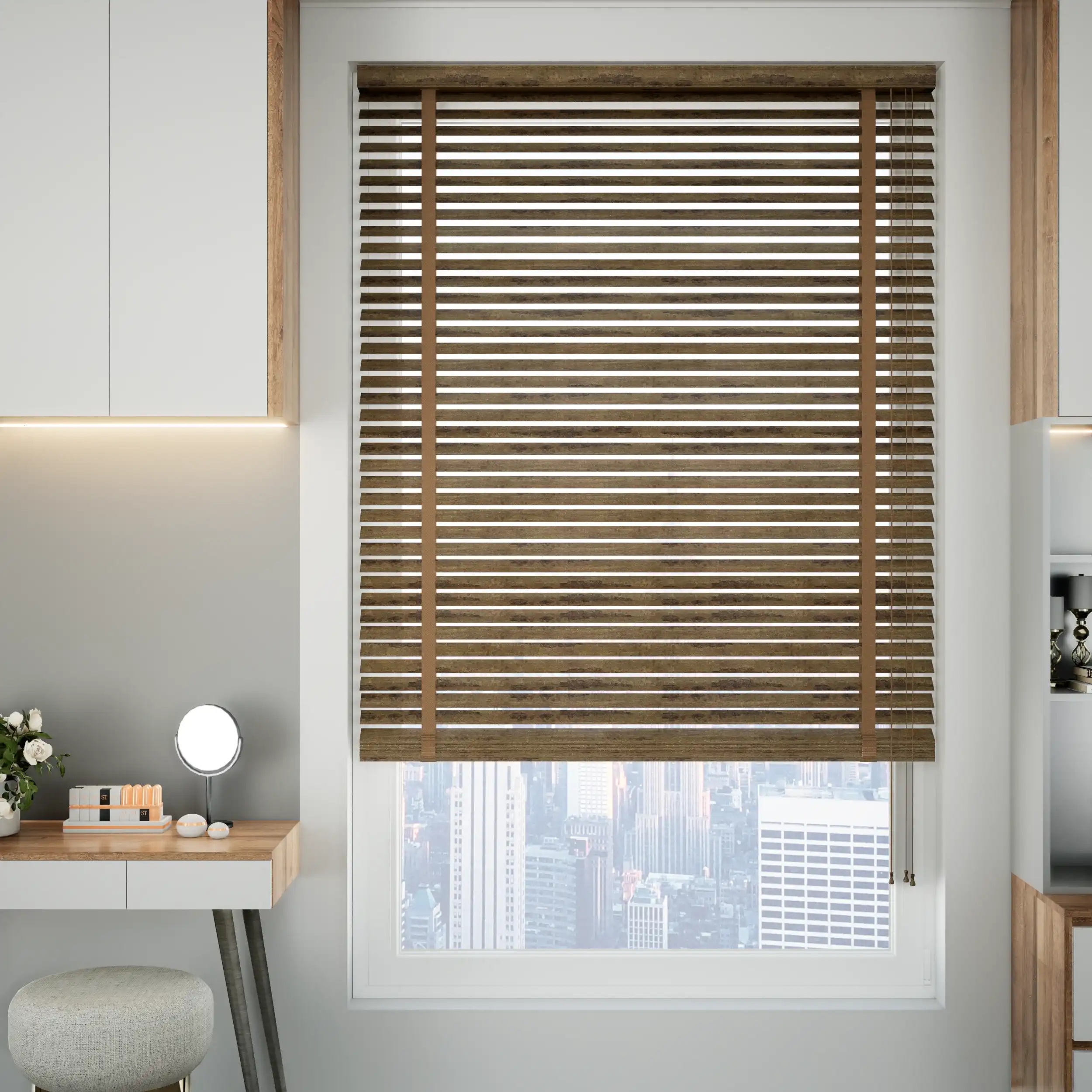
Selecting Blinds in Australia: The Essential Guide to Efficiency & Comfort
Wiki Article
The Secret Layer: How Your Blinds Can Reduce Your Energy Bills By Half
In the Australian search for comfort in the home, we often focus on the big-ticket items: the reverse-cycle air conditioner, the ceiling insulation, and the high-performance refrigerator. One player is frequently overlooked in the pursuit of energy efficiency: your window blinds. Windows are the most common source of heat gain in our hot summers and heat loss in cold winters. It's not all about fashion and privacy when you treat windows with the right furnishings. You're also improving the efficiency of your home's energy use, which can have a direct impact on your budget. The secret isn't in the fabric that you can see but rather in the invisible engineering that traps, reflects and creates insulation.
Understanding the issue as well as the physics behind the window is crucial for understanding the chance. Glass is an awful insulator. In summer, it acts like a magnifying lens, which allows shortwave solar radiation be absorbed by your house, where it gets absorption by your flooring and furniture, and then re-radiated as longwave energy, which is trapped inside--the infamous greenhouse effect. In winter, it's the opposite direction; the precious heat of your heater is lost to the glass directly. Standard single-layer blinds - simply a fabric or vinyl piece - only provide modest protection. Blinds can block glare but do not stop the flow of heat. Design that utilizes trapped air or reflective technology is extremely effective.
There are two types of blinds that deserve to be praised for their efficiency in the home: honeycomb blinds (or cell blinds) and thermal-backed blinds.
The Thermal-Backed Roller Blinds The Reflective shield
You can think of these as foil bags you'd apply to your windows. Addition of a thin metallic or other layer on the fabric back transforms an ordinary roller blind into a thermal powerhouse. This layer is essential. In summer, when the blind is closed to expose the reflective coating outward. It functions as mirrors, scattering large amounts of sunlight's heat away from the window before it can even penetrate the glass. It's a proactive, effective measure. In winter, the same principle works in reverse. When you lower the blind, the reflective coating will be facing your area and reflect the heat. It is a simple and elegant technology that turns blinds into an effective climate control system. Look for blinds that declare their "Total Solar Energy Rejected", or TSER, percent. A good thermal-backed window blind is able to block over 70 percent of solar heat.
Honeycomb Cellular Blinds They are Insulating Trap.
Honeycomb blinds are a beautifully constructed structural design that protects. The hexagonal cells resembling beehives aren't just a beautiful design feature, but they are also mini-insulators. When blinds are closed, the vertical columns are encased by pockets of air. When it is static, air is one of nature's best insulations. This is the basis for double-glazed windows and cavity wall insulation. The air pockets that are trapped create a formidable buffer between the glass of the window and the home. The air pockets slow down the heat transfer in both directions. In a heatwave, the blasting temperature of the glass is slower to warm the air inside the cells. This then slows the warming of your room. The icy glass will keep your home warm during a frosty day. The effect is amplified with double-cell designs which have two layers, stacked of cells to create an even deeper air barrier. Honeycomb blinds' appeal is their dual-season performance They are equally effective at keeping heat out as they are at keeping it out.
It is essential to use the seal in a strategic manner to maximize this capacity for energy savings. Sealing the product is important. Gaps can reduce efficiency. It is vital to have an expert installation and measurement done. Blinds that are installed properly in a window recess, or inside mount, will create a superior seal all around unlike one that hangs of the frame. When installing face-fit blinds, side channels are in place to help remove air and light gaps. The most important thing to consider is how they are operated. Blinds must be raised to the maximum at times of high heat in order to block summer sun. As soon as the sun sets, you can close your blinds to provide warmth in winter.
When consulting with suppliers, shift the conversation from just colour and cost-per-square-metre. Ask questions that provide the actual performance.
The financial logic is sensible. The upfront cost of thermal blinds or honeycomb blinds could be more expensive than those with the standard models. But, this shouldn't be considered as a expense, but instead as a long-term investment. Your heating and cooling system's workload can be reduced significantly, reducing the cost of operating it. The savings in energy over the lifetime of the blinds can be enough to pay for themselves. It's not only a window cover; it's a much lower-frequency, less expensive energy bill.
It's important to choose the most energy efficient shades for a sustainable and sustainable Australian house. It's all about utilizing smart design to adapt to our climate challenges, instead of fighting it with force-driven AC. It offers a quieter and more relaxing living space with fewer drafts and more stable temperatures. In an era of rising energy prices and growing environmental awareness, that hidden layer of insulation that is hidden in your blinds is a potent method of boosting efficiency in your home. This simple change pays for its cost in savings and comfort year after year. Take a look at the top blinds for more info including cheap blinds australia, blinds and blinds, blinds dir3ct, custom shutters online, order window shades online, local blind suppliers, just blinds, custom shaped blinds, blinds 101, 1300 blinds and more.
The Trust Metric, How To Screen Your Blind Suppliers Beyond The Brochure
If you purchase blinds from Australia, you're not only purchasing the product. You're making a commitment. The measurements will be in line, the fitting will be flawless and the motor will operate continuously for years, and should something go wrong, it will get fixed. The fabric that you hold is real, but beneath it is service, knowledge, and integrity. All of these are crucial. Before you even talk about fabric or ask for a quotation The most significant research should be conducted on the reputation of your supplier. In a field in which the price of a mistake can be the result of a poorly-fitting, ineffective blind and weeks of frustration, the company's standing within the marketplace is your main defense.
Reviews online are the new start point, but they are they are not just a glance. Even a 5.0 score that is based on a tiny number of reviews can be suspect. Look for volume and patterns across multiple platforms--Google My Business, ProductReview.com.au, and Facebook. Don't only read positive reviews; look into the 4- and 3-star reviews, and most importantly, the response of the vendor to negative feedback. This is where character is exposed. Do they respond defensively and blame others, or do they acknowledge the issue and provide a solution? Publicly committing to solve the issue shows accountability. Find specific praises that fall in line with your concerns. For example, "Their Mark, the installer was spotless and performed a fantastic job." Or "They managed their manufacturing delay transparently and kept me up on the latest developments." These specific comments are much more valuable than 100 "Great Job!" comments.
It is possible to manage digital reputations. This is the point where the time-value in business becomes a powerful, old-world measure. You can trust a company who has a track record of success. After 10 or 15 years of service, they are likely to have had to deal with a myriad of issues, such as the wrong fabric shipped from the warehouse or windows that were not square, and defective motors. They also designed systems to prevent these. The company is likely to have established strong relationships, which allows them to gain more leverage in negotiating warranty claims as well as acquiring better quality parts. Long-standing presence in the local community indicates they are invested in the area; their business name is a reflection of their involvement in the community. They cannot afford to do poor work and then change their name next year.
This is the most important step: assessing the quality of their local work. A reputable company will be able to give examples, not only from a general catalog and also from the homes of your region. Make sure to ask: "Can you show me examples of roller blinds you've put in windows with a heritage style similar to my own?" or "Do you have images of a motorised system you set up in a modern living space that is open?" These images show the past of great success. Better yet, inquire if you can visit an unfinished project or request the contact information of a client who employed their services in the past (with the permission of course). The ability to see the final product, look at the installation, and speak directly from the homeowner is a huge benefit. It transforms discussions from abstract promises to actual outcomes.
A live audit is included in your direct consultation. A reliable supplier will not restrict their services to a single transaction but rather one that is instructive and informative. They should be as thorough as is possible in asking questions: about the layout of your home, your daily routine, your worries for children and pets, as well as your long term vision. They should insist on a visit to the site to see anything more than a single, standard window, understanding that measurement from a floor plan is an invitation to disaster. The quote must be precise, separating out the cost of installation, supplies, and measuring. This lack of detail is a big red flag.
Be deeply wary of the "too-good-to-be-true" quote. Blinds are a highly competitive market. Many blinds operators compete only on cost. They rely on inferior products imported from abroad and don't have any local stocks. They subcontract their installation to bidders with the lowest price, offer warranties which are nearly impossible to keep or enforce. The true cost of blinds that wear out after a few months, motors that break just before a refund window, and installers that leave an unclean floor and don't answer their phones is what you will discover after. The price you pay for a reliable provider will reflect the salary of installers in the local area who are skilled, quality Australian materials and the overheads associated with having a physical location where they can be found.
The choice of a blinds provider in Australia ultimately comes down to managing risk. You're investing hundreds perhaps thousands, of dollars on a custom product that will remain a component of your home. Reputation is the collective memory of the past performance of the provider in fulfilling this responsibility. It's the most reliable indicator of how they will treat you. It demonstrates that they're willing to test twice, set up their products with care, back up their work and respond to your phone call in six months or even six. In the age of online stores and flimsy gig-economy services, a local supplier that has a solid, long-lasting reputation offers something priceless: certainty. It guarantees that you'll get the same stunning blind as from the catalog at your own home. Peace of mind is the last word in any quote.